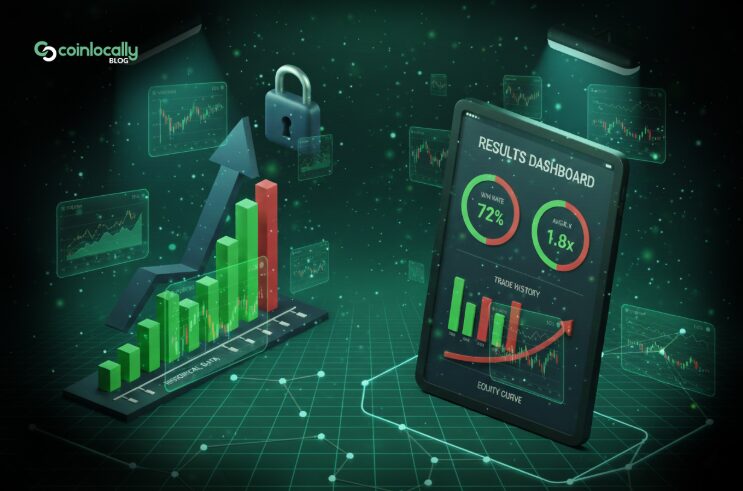
Backtesting means testing a strategy on historical market data to see how it would have performed if you had traded with it in the past. This is one of the most important steps before entering real trading because it shows the strengths and weaknesses of your system without financial risk and helps you enter the market with more confidence.
The Real Goal of Backtesting
Backtesting isn’t just about finding a few profitable trades. The main goal is to understand how the strategy behaves in different market conditions — from strong trends to ranging periods. This insight determines whether a strategy is reliable or needs adjustment.
Define Your Strategy Clearly Before Backtesting
For backtesting to be meaningful, your strategy’s rules must be clearly defined:
 What are the entry conditions?
When will you exit a trade?
Where are the stop-loss and take-profit levels?
If these aren’t clear, decisions during backtesting become subjective, and the results won’t be reliable.
Choosing the Right Tool
For beginners to intermediate traders, TradingView is the most accessible tool. Its Bar Replay feature allows you to move candle by candle and make decisions as if in real-time. This method is simple and provides good control over the testing process.
Select the Appropriate Timeframe and Market
The strategy must be tested on the same market and timeframe it will be applied to in the future. For example, if your strategy is for Bitcoin on a 4-hour chart, testing it on 15-minute data or in the Forex market will give misleading results. Alignment between market, timeframe, and historical period is key for reliable backtesting.
How to Properly Conduct a Backtest
1- Roll the chart backward and activate Bar Replay.
2-Let the candles form one by one.
3-Enter and exit trades strictly according to the strategy rules — no emotions, guesses, or “I think it’s better here.”
Each trade must be recorded:
Entry point
Stop-loss and take-profit
Confirmations
Trade result
Recording each trade ensures you face real data at the end of the test.
A Simple Example
Suppose your strategy is:
“If the trend is up and resistance is broken, enter on the pullback.”
In backtesting, you should check:
Was the trend truly upward?
Was the breakout valid or a false move?
Did the pullback return to the previous level?
Is the stop-loss reasonable?
This shows that backtesting isn’t just “seeing a setup” — it’s analyzing every condition of the strategy in the past.
Sufficient Number of Trades
To determine if a strategy is truly reliable, you need at least 30–50 trades. More trades give a more realistic picture and reduce the effect of random outcomes.
Analyze Results and Understand Performance
After testing, evaluate the results:
What is the strategy’s win rate?
What is the risk/reward ratio (average profit vs. average loss)?
What was the longest losing streak?
Under what conditions did the strategy perform best?
This analysis shows how stable and usable your strategy is in real trading.
Common Backtesting Mistakes
Changing rules mid-test
Ignoring stop-losses
Using unrelated timeframes
Relying on too few trades
Manipulating the chart while testing
These mistakes can make results look good but completely unrealistic.
Conclusion
Backtesting is a simple yet essential step in building a reliable trading strategy. By defining clear rules, testing step by step, recording trades, and analyzing performance, you can understand how dependable your strategy is and which areas need improvement. Proper backtesting makes trading calmer, more logical, and more predictable.